How Much Does Fill Dirt Cost in Fort Worth?
Fill dirt costs $5 to $25 per cubic yard delivered in HomeGuide’s cost guide, or $4 to $15 per ton. HomeGuide puts a dump truckload at $150 to $400 with delivery. HomeAdvisor’s typical fill dirt delivery job runs $344 to $1,339, and HomeAdvisor and Angi both put the average at $841.
| What you are pricing | Published range | Source |
|---|---|---|
| Fill dirt, per cubic yard, delivered | $5 to $25 | HomeGuide |
| Fill dirt, per ton, delivered | $4 to $15 | HomeGuide |
| Fill dirt, per cubic yard | $5 to $30 | HomeAdvisor |
| Basic unscreened fill, per cubic yard | $8 to $15 | Angi |
| Dirt to raise a yard, per cubic yard, dirt only | $8 to $15 | Thumbtack |
| Structural fill, per cubic yard | $10 to $30 | HomeGuide |
| Structural fill, per ton | $8 to $23 | HomeGuide |
| Structural fill, per cubic yard | $15 to $25 | Angi |
| Dump truckload, 10 to 14 cubic yards, delivered | $150 to $400 | HomeGuide |
| Fill dirt delivery, typical job | $344 to $1,339 | HomeAdvisor |
| Average fill dirt job or truckload | $841 | HomeAdvisor, Angi |
| 20 cubic yards, leveling a yard or patio base | $160 to $500 | Angi |
| 60 cubic yards, large grading or new construction | $480 to $1,500 | Angi |
| Topsoil, per cubic yard, for comparison | $10 to $50 | HomeGuide |
| Topsoil, per cubic yard, for comparison | $12 to $55 | HomeAdvisor |
These are national ranges from the big cost guides. Angi’s $841 average comes from 4,281 verified projects. Angi says project size, dirt type and delivery fees drive the spread. Our fill dirt delivery and dirt hauling covers Fort Worth and Burleson, with free estimates at the property.
How much fill dirt do you need?
Measure the area in feet, then multiply the length by the width by the depth. That gives you cubic feet. Angi’s method divides the result by 27 to get cubic yards, because a cubic yard is 27 cubic feet. Angi also says to round up.
Take a low back yard, 30 feet by 36 feet, that needs 6 inches of fill. Six inches is half a foot, so 30 times 36 times 0.5 is 540 cubic feet. Divide 540 by 27 and the yard needs 20 cubic yards. That is rough math for a flat, even fill.
HomeGuide says one dump truck load typically holds 10 to 14 cubic yards. So 20 yards takes two loads, whether the truck carries 10 yards or 14. At HomeGuide’s $5 to $25 per cubic yard for delivered fill dirt, 20 yards runs about $100 to $500. Angi’s project table lands close, at $160 to $500 for 20 yards.
Weight explains the per-ton prices. HomeGuide lists a cubic yard of fill dirt at 2,000 to 2,600 pounds. A ton is 2,000 pounds, so each cubic yard is 1 to 1.3 tons. That is why HomeGuide’s $4 to $15 per ton runs below its $5 to $25 per cubic yard.
What moves the price of fill dirt around Fort Worth?
HomeGuide says fill prices depend on the type, the volume ordered and the distance. On a real job, five things show up in the price.
Haul distance. Distance is truck time. HomeAdvisor says haulers without set delivery fees may charge $65 to $100 per hour. A load from across the county uses more of those hours than a load from down the road.
Access. HomeAdvisor says delivery charges rise for remote locations or areas with difficult access. Its delivery fees often cover one dump where the truck can reach. That spot should be solid, dry ground at least 15 feet from overhead trees.
In Fort Worth, a truck or dumpster that has to sit in the street needs a Temporary Street Use Permit. That permit takes 3 to 5 business days.
Order size. Angi notes that suppliers often set minimum orders, and those minimums affect pricing on small jobs. Buying in bulk often lowers the per-yard rate, Angi adds. HomeAdvisor says some pros bill delivery as a separate line for loads up to 15 cubic yards.
Spreading. HomeAdvisor says most delivery crews drop the load at the curb or driveway. HomeGuide puts installation and rough spreading at $200 to $400 on top of the dirt.
Dirt that has to leave. Some lots have too much dirt, or the wrong kind under a future slab. HomeGuide puts landfill dumping alone at $30 to $50 per ton. At 1 to 1.3 tons per cubic yard, that is roughly $30 to $65 a yard by HomeGuide’s numbers.
On a lot with high and low spots, cut and fill excavation moves dirt from high to low. That dirt stays on the lot and skips the dump fee. For dirt that does leave, Turkey Creek Landfill in Alvarado requires every load to be tarped.
Can regular fill dirt go under a slab?
Angi says basic unscreened fill suits raising or filling where precision isn’t critical. A low yard fits that description, and our yard leveling cost guide covers what the grading itself costs. Under a house slab, the rules get tighter.
Fort Worth’s residential code, section R506.2, says all vegetation, topsoil and foreign material come out from inside the foundation walls. Section R506.2.1 limits how deep fill under a slab can go. Unless deeper fill is approved, the limit is 24 inches for clean sand or gravel and 8 inches for earth.
Structural fill is dirt that meets a written spec, and many plans call it select fill. Angi calls structural fill the right choice under foundations or roads. The builder or engineer sets the spec. HomeGuide lists structural fill at $10 to $30 per cubic yard, and Angi lists it at $15 to $25.
TxDOT’s Item 132 shows what a written spec looks like. Its Type A embankment is granular material, free of vegetation or other objectionable material. Type A caps the liquid limit at 45 and the plasticity index at 15.
Item 132 places fill in lifts no thicker than 16 inches loose or 12 inches compacted. Soils with a plasticity index of 15 or less get compacted to at least 98% of maximum dry density. Those limits matter on Tarrant and Johnson County clay, which swells wet and shrinks dry.
We build to the elevations and specs the builder or engineer gives us. When the plan calls for it, a testing lab checks the compaction.
Do you need a permit to add fill dirt in Fort Worth?
It depends on the lot and what the fill is for. Fort Worth requires an approved fill permit before fill is placed, under Ordinance 15789. The city’s fill permit checklist lists a $150 fill site registration fee, and registrations are renewed every year.
A registered site posts a sign between 3 by 3 feet and 4 by 8 feet in size. Fill used for landscaping on improved property is exempt from registration and the sign. So is fill on a lot where the city has issued a valid building permit for construction.
Fill on a pad site may not rise more than three feet above the highest elevation along adjacent lots. Slopes can be no steeper than three feet across for every foot of rise. A retaining wall built to city code is the exception. Fill within 50 feet of existing trees needs an urban forestry permit.
Bigger jobs need a grading permit as well. Fort Worth requires one for land disturbing activity of one acre or more. The fee is $950 plus $25 per acre, with a $50 application fee and a $16.87 technology fee.
A new detached single-family home or duplex also needs a Residential Lot Grading Pattern with its building permit application. Burleson requires a Notification of Grading, and grading there has to comply with Ordinance No. B652. In unincorporated Johnson County, the county handles development and floodplain items.
How do you get fill dirt hauled in and spread?
Start with the divide-by-27 math and a rough depth. Then tell us what the fill is for, such as a low yard or a pad for a new house.
We work out of Burleson, and Fort Worth’s south side is our biggest market. Decades of demolition and dirt work sit behind the company.
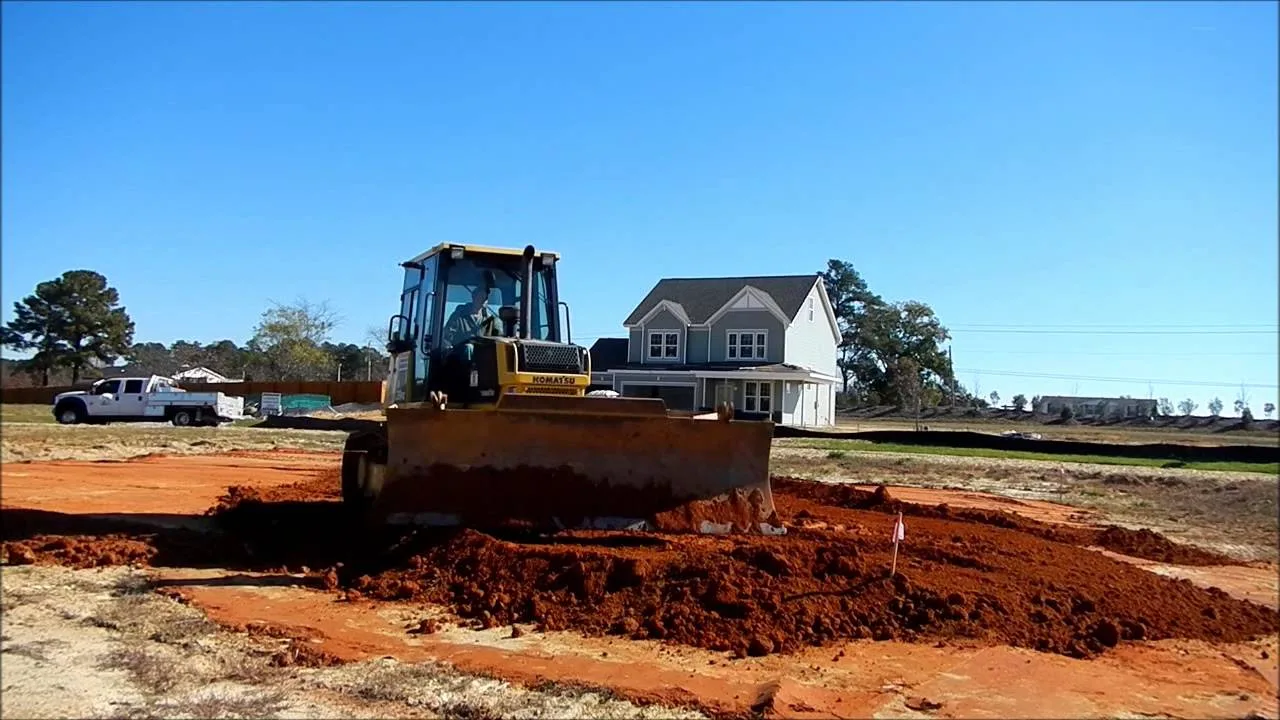
Our own trucks and high-side end-dump trailers haul the fill in. Dozers, wheel loaders and three skid loaders spread it. For a new house, our building pad work for new homes follows the builder’s elevations and specs.
When the lot needs its final shape, grading and site preparation follows the fill. We price every fill job at the property, and the estimate is free. Ask for a free estimate with the address and the rough size of the area.